The best way to determine how much water your plants need is to pay attention to them. Every garden has a different microclimate, and the weather during the time of planting can vary the initial irrigation needs of a garden by a lot.
However, in general, we recommend:
| Timeline | 0.4-0.6gph drip irrigation (or divide these durations by half for 0.9-1gph) |
Hand-watering by hose or can | Sprinklers or hose sprinkler |
| 1st-2nd Weeks after planting |
Normally: 20min/day
|
Normally: 5-10sec/plant/day In high summer heat: 5-10sec/plant x2/day |
Normally: 10-20min/day In high summer heat: 15min x2/day |
| 2-6th Weeks | Normally: 1hr x2/week In high summer heat: |
x2-3/week | ~15min x3/week |
| 6-12th Weeks | 2hrs x1/week |
x1/week | 15-30min x1/week |
| Long-term | 2hrs x2/month |
x1/monthor never | 15-30min x1/monthor never |
Notes for the first season:
- Plants get tougher as time goes on, because their roots get deeper. They are the most vulnerable during the first few days; when in doubt, especially if it’s very hot, water the hell out of them for the first few days. To a slightly lesser extent, the same holds true for the first few weeks. They will get progressively tougher over the next three months, and if you can get them through that first season, they’ll be pretty hardy. In general, it’s a good sign when you see plants growing; that means that their roots are stabilized and you can start cutting back on water.
- Water during the mornings or evenings to avoid water waste due to evaporation.
- For longer watering durations using sprinklers, we recommend the “cycle and soak” technique: splitting the total watering time into multiple cycles with short breaks in between. This method helps water soak into the soil slowly and deeply, avoiding run-off and waste. (This strategy isn’t necessary with well-designed drip irrigation, which provides water at a slower rate that plants can absorb.)
- You can skip waterings when it rains.
- Again, every garden and irrigation system is a little different, so feel free to tweak this a bit as you watch the garden.
- Whether or not to water in the long term is up to you!
| Reasons not to water long-term: | Reasons to water long-term: |
|
|
Notes for the long term:
- Native plants do best with deep infrequent waterings. This helps them grow deep tap roots. After the first couple weeks, the plants will prefer an environment where the soil gets completely dry between waterings. In the long term, I wouldn’t water them any more often than once a week max. If you want the plants to grow faster or be lusher, you can increase these suggested watering durations/amounts, but keep the time in between waterings the same.
- Hand-watering occasionally during the winter is good for the plants, especially during the first 1-3 years. Without winter water, their roots can desiccate; most of them will probably survive, but wetting their roots occasionally is very helpful. (This is most critical for newly planted evergreen plants, like pines or sedges.) We recommend hand-watering the garden anytime we go 2-8 weeks without rain or deep snow, at least during the first winter. (Don’t forget to drain and disconnect your hose afterwards, so it doesn’t freeze.)
- In the long term, low-water native plants only NEED occasional supplemental water in times of serious drought, although they are a bit vulnerable during the first three years while they are still growing those deep roots. If you don’t have automatic irrigation, in the long term we suggest giving the garden a good deep watering (by hand or via hose sprinkler) if it hasn’t rained in 4-8 weeks in the heat of summer.
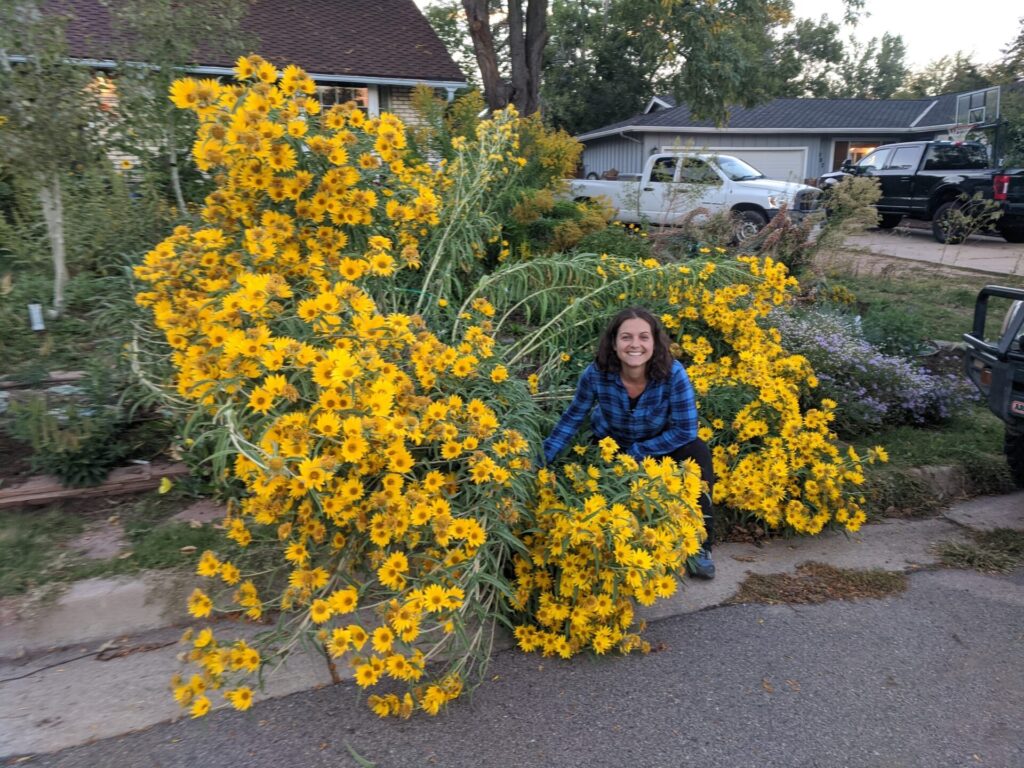
- If you see plants looking “leggy” (growing tall and bowing over), you are probably watering them too much. That can actually shorten their lives and increase weed growth. Feel free to send us photos if you’re concerned about your plants at any time.